
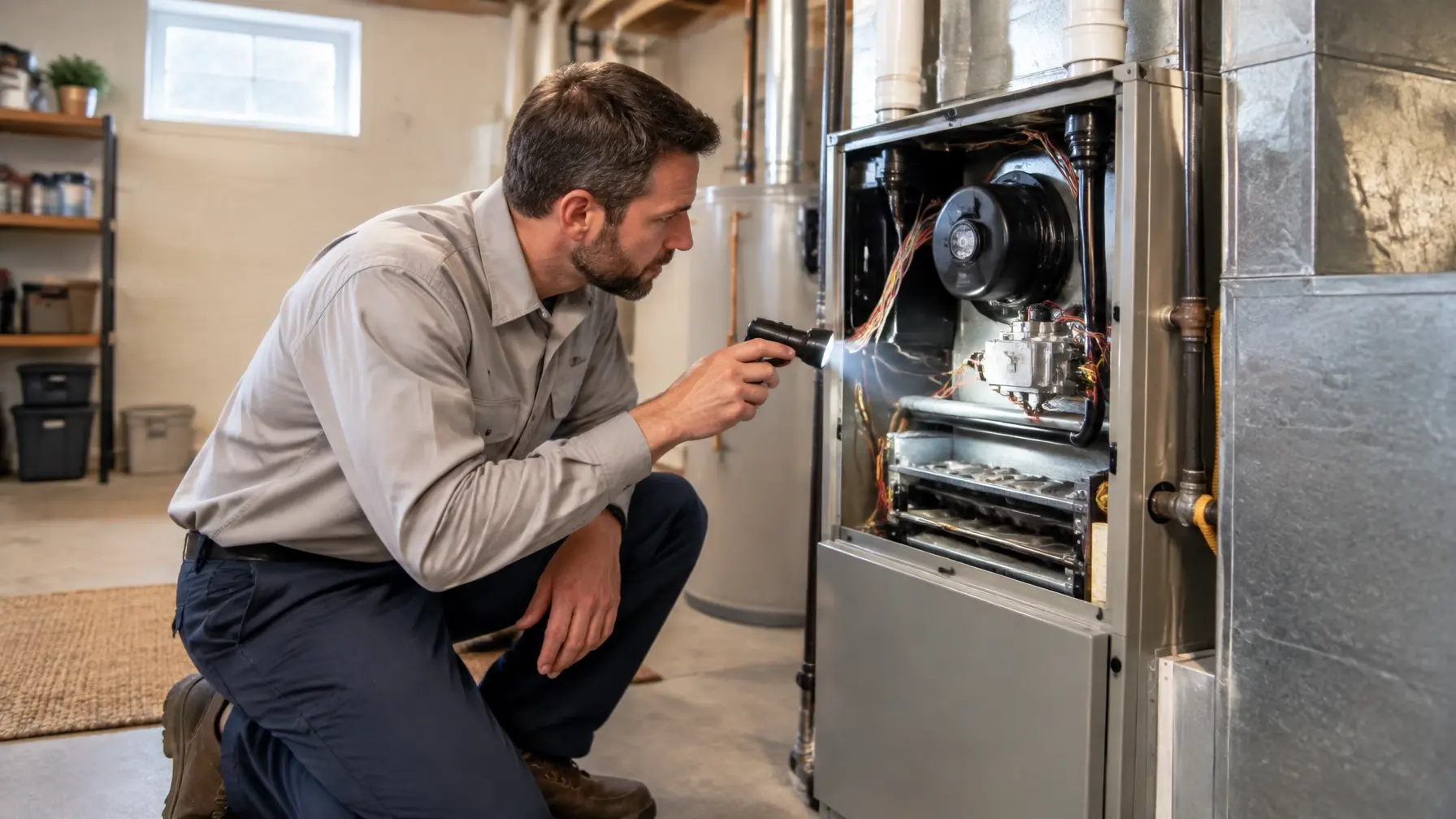
Fall is a good time to check that your furnace is ready for colder weather. A system that worked last winter may still need attention before you rely on it every day. A professional tune-up can help identify maintenance needs, but it cannot guarantee that a furnace will avoid every breakdown.
Pay attention to changes in how your system sounds, heats your home, and uses energy. Here are five warning signs to look for, and practical steps you can take before the first cold snap.
1. Strange noises that are new or getting louder
A furnace may make some sound as it starts and runs, but a new or persistent noise deserves attention. Banging, rattling, squealing, scraping, or repeated clicking can have different causes. A loose panel or a dirty filter may be simple to address, while other issues may need a technician to inspect internal components.
Start by noting when the sound happens: during startup, while the blower runs, or as the furnace shuts off. Check that the air filter is seated correctly and that supply and return vents are not blocked. Don’t remove panels or reach inside the furnace to investigate.
If the noise continues, becomes louder, or comes with a burning smell or poor heating, turn the system off if you can do so safely and arrange a professional inspection. Describe the sound and when it occurs when you call. Those details can help the technician assess the issue.
2. Some rooms feel much colder than others
If one room is comfortable but another stays chilly, your furnace may not be distributing heat evenly. A clogged filter, blocked vents, thermostat issues, or a problem with ductwork or the blower can affect comfort. The cause is not always the furnace itself.
First, check that the thermostat is set to heat and that its temperature setting is appropriate. Make sure furniture, rugs, or curtains aren’t covering supply or return vents. If your filter is dirty, replace it with the size and type recommended by the furnace manufacturer. Check the filter monthly during heavy use, and replace it as needed.
If uneven heating persists after these basic checks, book an HVAC inspection. A technician can assess airflow, the thermostat, and the heating system rather than guessing at the cause. Keep a note of which rooms are affected and whether the problem changes when doors are open or closed.
3. Your energy bills are rising without an obvious reason
An increase in heating costs can reflect colder weather, changing utility rates, or a higher thermostat setting. But if your bills are climbing compared with similar periods and your habits have not changed, it’s worth checking the system.
A dirty air filter can restrict airflow, and other maintenance or equipment issues may affect how efficiently the furnace operates. Start with the filter and check that vents are open and unobstructed. Compare bills with the same period last year, while keeping weather and rate changes in mind.
If the increase continues, arrange a tune-up or diagnostic visit. A qualified technician can inspect the system and identify whether maintenance or repair is needed. A tune-up may help address some performance problems, but it does not guarantee lower bills or prevent future repairs. A professional HVAC technician can inspect your heating system, identify potential problems, and recommend appropriate maintenance or repairs.
4. The burner flame looks yellow or flickers
If you can see the burner flame through the furnace’s viewing window, take note if it looks yellow, lazy, or unstable rather than steady and blue. Flame appearance alone cannot tell you exactly what is wrong, but an unusual flame can be a reason to have the furnace checked. Combustion problems can pose a safety risk, including the possibility of carbon monoxide.
Do not adjust the burner or try to diagnose the cause yourself. Contact a qualified HVAC technician and explain what you observed. The U.S. Department of Energy notes that fuel-burning equipment needs proper maintenance and venting, and that carbon monoxide is odorless and colorless. Review its combustion equipment safety guidance.
If a carbon monoxide alarm sounds, or you suspect a gas leak, leave the home immediately. Don’t operate switches or use a phone inside if you smell gas. Once outside, call 911 or your gas utility, and do not re-enter until emergency responders or the utility say it is safe. Have the furnace professionally inspected before using it again. For more information about carbon monoxide risks, see the Consumer Product Safety Commission’s indoor air quality guide.
5. The furnace keeps starting and stopping
Frequent starts and stops, often called short cycling, can mean the furnace is not completing a normal heating run. It may be related to restricted airflow, thermostat placement or settings, or another system issue. Repeated cycling can also put extra wear on components.
Check that the air filter is clean and that supply and return vents are open. Make sure the thermostat is not near a heat source, such as direct sunlight, that could affect its reading. If the furnace continues to cycle frequently, schedule a professional inspection rather than repeatedly resetting the system. A technician can check operation and determine whether repair or adjustment is needed.
Book a tune-up before you need the heat every day
A few simple checks (replacing a dirty filter, clearing blocked vents, and paying attention to new sounds) can help you spot a change early. For issues that persist, or anything involving a burner flame, unusual cycling, or poor performance, contact a qualified HVAC technician.
Fall appointments can fill as homeowners prepare for colder weather, so consider scheduling ahead.


